
From Streaming Apps to Social Boards: How Entertainment Fans Organize What They Watch
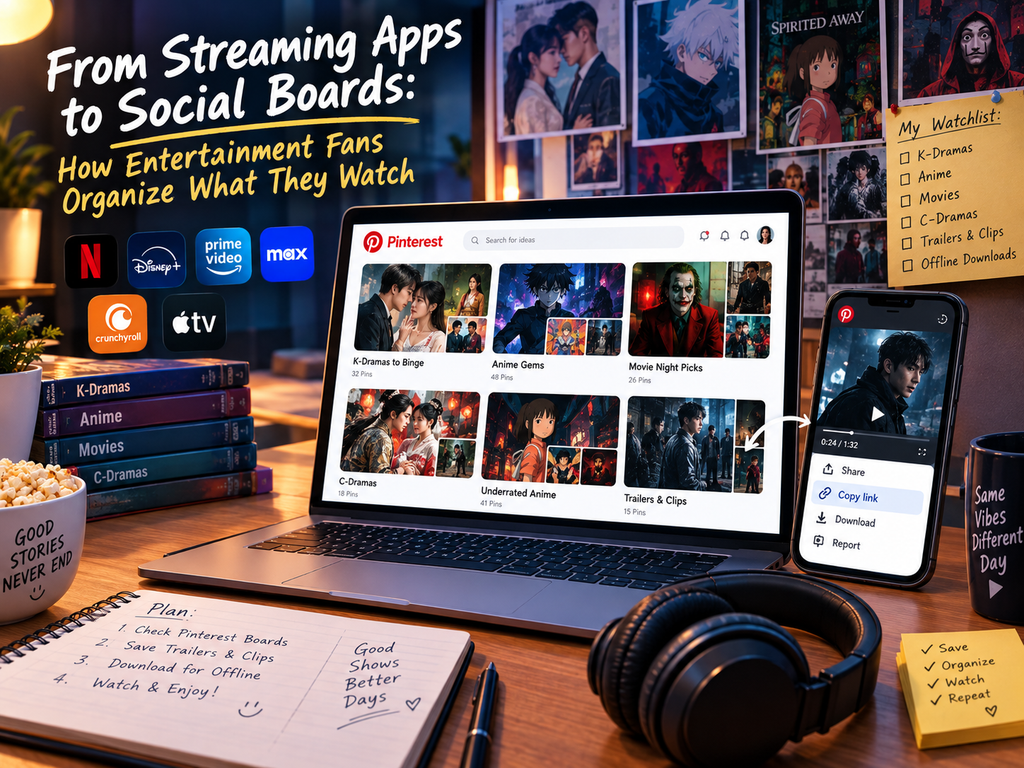
Anyone who streams a lot of content ends up with the same problem: too many good recommendations and no good way to keep track of them. A friend mentions a K-drama, an app suggests an anime you have never heard of, a trailer autoplays and hooks you before you can note the title down. Within a few months, “things to watch” turns into a scattered mess spread across screenshots, notes apps and half-remembered conversations.
Streaming apps built around K-dramas, C-dramas, anime and a constant rotation of new titles make this problem worse in a good way — there is simply too much content to keep in your head. That is where a second, lighter-weight tool becomes useful: a place to plan, save and revisit what you want to watch next.
Why a Visual Watchlist Works Better Than a Note
Text lists get abandoned quickly because they carry no context. A line that says “that drama with the doctor” a month later means nothing. A visual watchlist, where each title has a poster, a still frame, or a trailer thumbnail attached, jogs your memory instantly. This is one of the reasons Pinterest has become an unofficial watchlist tool for entertainment fans, even though it was never designed for streaming.
People build boards for “K-Dramas to Binge,” “Underrated Anime,” or “Movie Night Picks,” pinning posters, character stills and trailer clips they find while scrolling. It works because the visual format matches how we actually remember media: by faces, colors and moments, not by title alone.
Saving Clips for Offline Reference
The one gap in this workflow is video. Pinterest lets you pin a trailer or clip to a board, but it does not offer a built-in way to download that video for offline viewing — useful when you are commuting, traveling, or simply want a permanent copy before a pin disappears.
A dedicated Pinterest video downloader solves this. A tool like Pin Video İndirici lets you paste a pin’s link and save the video in HD, without watermarks, and without needing an account. It works for standard video pins as well as Pinterest Reels, and it runs the same way on a phone or a desktop browser, so a trailer saved from your phone on the bus is just as easy to grab as one found while browsing on a laptop.
Building a Better Entertainment Routine
Combining a streaming app with a simple visual organizing system solves the “what do I watch next” problem better than either tool alone. Separate boards by mood or genre rather than one giant unsorted list, pin the trailer rather than just the poster since a ten-second clip tells you more about tone than a static image, and revisit boards before opening the app so you decide what to watch before you start scrolling. Downloading anything you plan to watch offline also matters more than it should — long flights, weak signal and data limits are still real constraints even with a huge library at your fingertips.
A Note on Responsible Use
Downloading video for personal offline viewing is standard practice and is generally considered acceptable for public content. Reposting someone else’s clips as your own, or using downloaded material commercially, is a different matter and should always be avoided. Whatever tool you use to save video, keep it to personal reference and give credit where it is due.
Final Thoughts
A packed streaming library is only useful if you can actually find something to watch in it. Pairing your favorite app with a simple, visual system for saving trailers, posters and clips — and a reliable way to keep those clips offline — turns an overwhelming catalog into something you actually enjoy browsing. It is a small habit, but it changes how much of your library you actually get around to watching.


